

- Introduction
The way people experience wildlife is changing with the development of modern technology. Traditional zoos have allowed visitors to observe animals in real-life environments, but digital innovation is creating new ways to explore the animal kingdom. One emerging concept is the artificial zoo, which combines technology, virtual environments, artificial intelligence, and digital animal experiences.
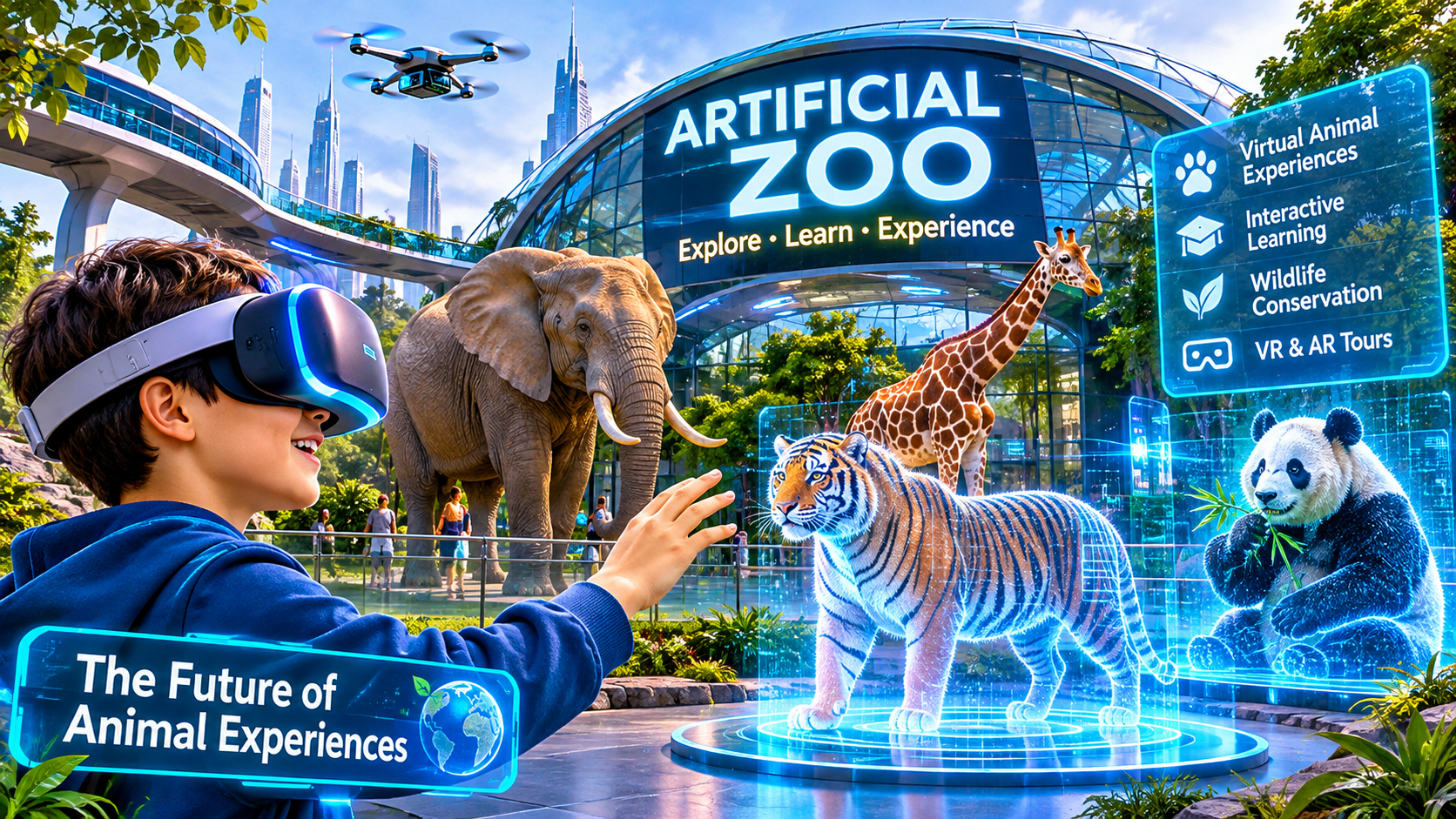
An artificial zoo is a technology-based environment where visitors can explore digitally created animals and wildlife habitats. These experiences may include virtual reality, augmented reality, 3D animations, interactive screens, and AI-powered animal simulations. Instead of depending entirely on physical animal exhibits, artificial zoos offer an alternative way to learn about wildlife.
As technology continues to advance, artificial zoos may become an important part of education, entertainment, and wildlife awareness.
What Is an Artificial Zoo?
An artificial zoo is a digital or technology-supported wildlife environment designed to recreate the appearance and behavior of animals through virtual experiences. It allows visitors to explore different species without necessarily visiting a traditional zoo.
These environments can display realistic animal models, simulated habitats, and interactive wildlife experiences. Visitors may see digital lions, elephants, giraffes, pandas, and marine animals while learning about their natural behaviors and environments.
Some artificial zoo experiences use virtual reality headsets, while others operate through large digital displays, mobile applications, or interactive installations.
The main purpose is to combine entertainment with education while providing an innovative way to understand animals and biodiversity.
How Does an Artificial Zoo Work?
Artificial zoos use several modern technologies to create realistic digital wildlife experiences.
1. Virtual Reality Technology
Virtual reality allows visitors to enter computer-generated environments using special headsets. They can explore forests, oceans, deserts, and other natural habitats while observing digitally recreated animals.
For example, visitors may experience walking through a virtual jungle and watching elephants or tigers in their simulated natural surroundings.
2. Augmented Reality Experiences
Augmented reality adds digital animals and information to real-world surroundings through smartphones, tablets, or special displays.
Visitors can point their devices toward a specific area and see a virtual animal appear on the screen. This makes learning more interactive and engaging.
3. Artificial Intelligence
Artificial intelligence can help digital animals respond to visitors and simulate certain behaviors. For example, an AI-powered animal character may react to movement, answer educational questions, or demonstrate feeding patterns.
These simulations can make digital wildlife experiences more interesting and personalized.
4. 3D Animation and Digital Modeling
Three-dimensional modeling creates detailed digital representations of animals. Designers can reproduce their physical appearance, movements, and habitats to provide realistic educational experiences.
These models can be displayed on computers, interactive screens, and virtual reality platforms.
Key Features of an Artificial Zoo
Artificial zoos can offer several features that make them different from traditional wildlife attractions.
- Digital Animal Exhibits: Visitors can explore realistic virtual representations of different animal species.
- Interactive Learning: Educational information helps people understand animal behavior, habitats, and biodiversity.
- Virtual Habitats: Digital environments recreate forests, oceans, deserts, and grasslands.
- AI-Based Interaction: Artificial intelligence can make virtual animals respond to user activities.
- Immersive Experiences: Virtual reality and augmented reality create engaging wildlife adventures.
These features can make artificial zoos useful for families, students, teachers, and technology enthusiasts.
Benefits of Artificial Zoos
Artificial zoos provide several potential advantages for education, entertainment, and wildlife awareness.
Better Wildlife Education
One major benefit is the opportunity to learn about animals through interactive digital experiences. Students can explore different species, understand their habitats, and discover important facts in an engaging environment.
Reduced Dependence on Live Animal Exhibits
Digital wildlife experiences can reduce the need to keep certain animals in physical exhibition spaces. However, they do not replace the conservation work performed by responsible traditional zoos and wildlife organizations.
Accessible Learning Opportunities
People who cannot easily visit physical zoos may explore digital wildlife experiences through online platforms, educational applications, and virtual reality systems.
Engaging Entertainment
Artificial zoos can combine gaming, storytelling, animation, and education. This makes wildlife learning more enjoyable for children and adults.
Environmental Awareness
Digital exhibits can explain endangered species, habitat destruction, climate change, and conservation challenges. They can encourage visitors to understand the importance of protecting natural ecosystems.
Artificial Zoo vs. Traditional Zoo
Artificial zoos and traditional zoos offer different approaches to wildlife experiences. Both can provide educational value, but their methods are not the same.
| Feature | Artificial Zoo | Traditional Zoo |
| Animal Display | Digital animals and simulations | Real animals |
| Technology | VR, AR, AI, and 3D models | Physical exhibits and monitoring systems |
| Interaction | Digital and virtual interaction | Observation and selected activities |
| Accessibility | May be available online or digitally | Requires a physical visit |
| Education | Interactive digital learning | Direct observation and educational programs |
| Animal Welfare | No live animals required in purely digital exhibits | Requires animal care and welfare management |
Both formats can contribute to wildlife education, depending on their design and purpose.
Challenges and Limitations of Artificial Zoos
Although artificial zoos offer exciting possibilities, they also have certain limitations.
One important challenge is the cost of developing advanced digital environments. High-quality virtual reality systems, realistic 3D models, and interactive installations can require significant investment.
Another limitation is the lack of direct contact with real animals. Digital experiences cannot fully reproduce the emotions and observations associated with seeing wildlife in person.
Technical issues can also affect the experience. Visitors may face problems with internet connectivity, software performance, or compatibility with digital devices.
Furthermore, artificial zoos must provide accurate educational information. Poorly designed simulations may create unrealistic expectations about animal behavior or natural habitats.
The Future of Artificial Zoos
The future of artificial zoos will likely depend on improvements in artificial intelligence, virtual reality, augmented reality, and immersive digital environments.
More advanced systems may allow visitors to explore detailed ecosystems and interact with intelligent virtual animals. Educational institutions could also use these experiences to teach biology, environmental science, and wildlife conservation.
Another possibility is the development of hybrid attractions that combine physical exhibits with digital technology. Visitors could observe real educational displays while using augmented reality to explore additional information about different species.
As digital experiences become more accessible, artificial zoos may create new opportunities for wildlife education and entertainment around the world.
Conclusion
Artificial zoos represent an innovative approach to exploring wildlife through modern technology. By combining virtual reality, augmented reality, artificial intelligence, and 3D modeling, these environments can provide interactive educational experiences without requiring live animals in digital exhibits.
Although they cannot completely replace traditional zoos or real-world wildlife conservation, artificial zoos offer valuable opportunities to improve accessibility, encourage environmental awareness, and make animal education more engaging.
As technology continues to evolve, digital wildlife experiences may become an increasingly important part of how future generations learn about and appreciate the natural world.
