

Introduction
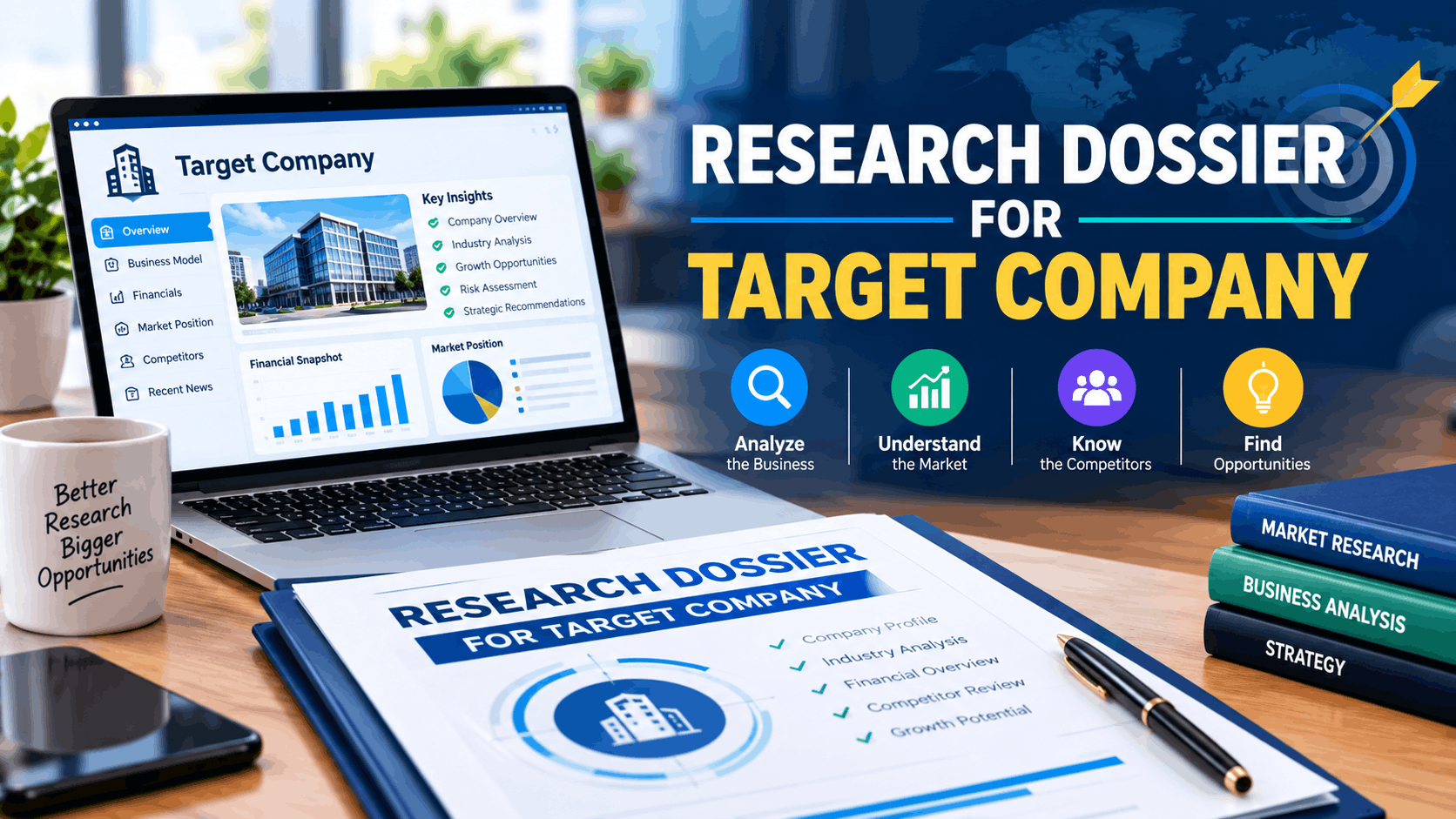
A research dossier for a target company is an organized document that contains important information about a business. It helps professionals understand a company’s background, products, services, financial position, competitors, market presence, and future opportunities.
Whether you are preparing for a business partnership, sales meeting, investment decision, or corporate acquisition, having detailed company research can make your decisions more informed.
Instead of collecting random information from different sources, a research dossier brings everything together in one structured report. In this guide, we will explain how to create a research dossier for a target company, what information to include, and how to use it effectively.
What Is a Research Dossier for a Target Company?
A research dossier for a target company is a detailed research report that provides an overview of a specific business. It includes relevant facts, industry information, business performance, leadership details, and competitive analysis.
The main purpose is to understand how a company operates, what makes it successful, and where potential risks or opportunities exist.
Businesses commonly use these dossiers for:
- Sales and business development.
- Investment research and evaluation.
- Partnership opportunities.
- Market analysis.
- Mergers and acquisitions.
- Competitor research.
A well-prepared dossier saves time and provides a reliable foundation for strategic planning.
Why Is a Company Research Dossier Important?
Company research plays an important role in business decision-making. Before approaching a potential client, investor, or business partner, understanding their organization can help you prepare more effectively.
Here are some important benefits:
- Better Business Decisions
Detailed company information helps businesses evaluate opportunities and identify possible risks before making important decisions.
- Improved Sales Preparation
Sales professionals can understand a potential customer’s needs, challenges, and business goals. This makes conversations more relevant and productive.
- Competitive Understanding
Researching a target company also provides insights into its competitors, market position, and industry challenges.
- Identifying Growth Opportunities
A dossier can reveal potential areas for collaboration, expansion, investment, or service improvement.
Key Information to Include in a Research Dossier
A useful research dossier should cover several important areas. The information you collect will depend on your research goals, but the following sections provide a strong foundation.
| Research Section | Information to Include |
| Company Overview | Name, location, history, and website |
| Products and Services | Main offerings and target customers |
| Leadership Team | Founders, executives, and key decision-makers |
| Financial Information | Revenue, funding, and financial performance |
| Competitor Analysis | Main competitors and market position |
| Market Research | Industry trends and business opportunities |
| News and Updates | Recent announcements and developments |
| Risks and Opportunities | Potential challenges and growth areas |
Including these details creates a complete picture of the target company’s business environment.
How to Create a Research Dossier for a Target Company
Creating a professional dossier does not have to be complicated. Following a structured process makes the research easier to manage.
Step 1: Define Your Research Objectives
Before collecting information, identify why you are researching the company. Are you preparing for a sales meeting, evaluating an investment, or exploring a partnership?
Your objectives will determine which information matters most. For example, a sales-focused dossier should emphasize customer needs, company challenges, and decision-makers.
Step 2: Collect Basic Company Information
Start with essential company details, including its official name, headquarters, website, founding year, business model, and industry.
The company’s official website, annual reports, and verified business profiles can provide useful information.
Step 3: Research Products and Services
Understand what the company sells and how its products or services solve customer problems.
Look at its pricing approach, product categories, customer segments, and unique selling points. This information helps you understand the company’s value proposition.
Step 4: Identify Key Decision-Makers
Find information about founders, executives, department heads, and other relevant decision-makers.
LinkedIn profiles, official leadership pages, and company announcements can help identify the people responsible for important business decisions.
Step 5: Analyze Financial Performance
Financial research helps you understand the company’s business health. Depending on public availability, examine revenue, profitability, funding rounds, investments, and growth patterns.
For public companies, annual reports and financial statements are valuable sources. For private companies, clearly distinguish verified information from estimates.
Step 6: Study Competitors and Market Position
Identify the company’s major competitors and compare their products, pricing, customer base, and market presence.
You should also examine industry trends that could influence the company’s future performance.
Step 7: Identify Risks and Opportunities
Every company faces challenges. These may include changing customer preferences, strong competition, regulatory requirements, or financial pressure.
At the same time, look for opportunities such as new markets, product expansion, strategic partnerships, and emerging technologies.
Step 8: Organize and Verify Your Findings
Finally, arrange your research into clear sections. Include source links, publication dates, and notes explaining important findings.
Verify critical information using multiple reliable sources whenever possible. This makes your dossier more accurate and useful.
Best Sources for Company Research
Finding reliable information is essential when preparing a research dossier. Different sources provide different types of business insights.
Some useful research sources include:
- Official Company Websites: Useful for company history, products, services, and leadership information.
- Annual Reports: Provide financial details and business performance information.
- LinkedIn: Helps identify executives, employees, and professional updates.
- Business News Websites: Offer recent announcements, acquisitions, and industry developments.
- Government Databases: Provide registration information and regulatory records where available.
- Industry Reports: Help explain market size, trends, and competitive conditions.
Always check the reliability and date of the information before including it in your report.
Common Mistakes to Avoid
Even a detailed company dossier can become less useful if the research process is not properly managed.
Avoid these common mistakes:
- Relying on only one information source.
- Including outdated company information.
- Confusing assumptions with verified facts.
- Ignoring competitors and industry trends.
- Collecting unnecessary information without a clear objective.
- Forgetting to include source references.
A focused and well-organized report is generally more valuable than a lengthy document filled with irrelevant details.
Conclusion
A research dossier for a target company is a valuable tool for understanding businesses and making informed strategic decisions. By collecting information about company history, leadership, products, financial performance, competitors, and market opportunities, you can develop a clearer picture of your target organization.
The most effective approach is to define your objectives, use reliable sources, verify important details, and organize your findings into a structured report.
Whether you work in sales, marketing, investment, or business development, a well-prepared company research dossier can help you identify opportunities, reduce uncertainty, and prepare for more productive business conversations.
Frequently Asked Questions (FAQs)
1. What is a research dossier for a target company?
It is a structured document containing important information about a business, including its background, leadership, products, financial performance, competitors, and market position.
2. Why should businesses create company research dossiers?
Businesses create these dossiers to understand potential clients, evaluate partnerships, analyze competitors, identify investment opportunities, and support strategic decisions.
3. What information should a company research dossier include?
It should include company details, products and services, leadership information, financial data, competitors, industry trends, recent news, and potential risks.
4. Which tools can help with company research?
Useful tools include LinkedIn, company websites, annual reports, business databases, financial platforms, government records, and industry research publications.
5. How often should a research dossier be updated?
A dossier should be updated whenever significant business developments occur. For active sales opportunities or investment research, reviewing it every few months can help keep the information relevant.
